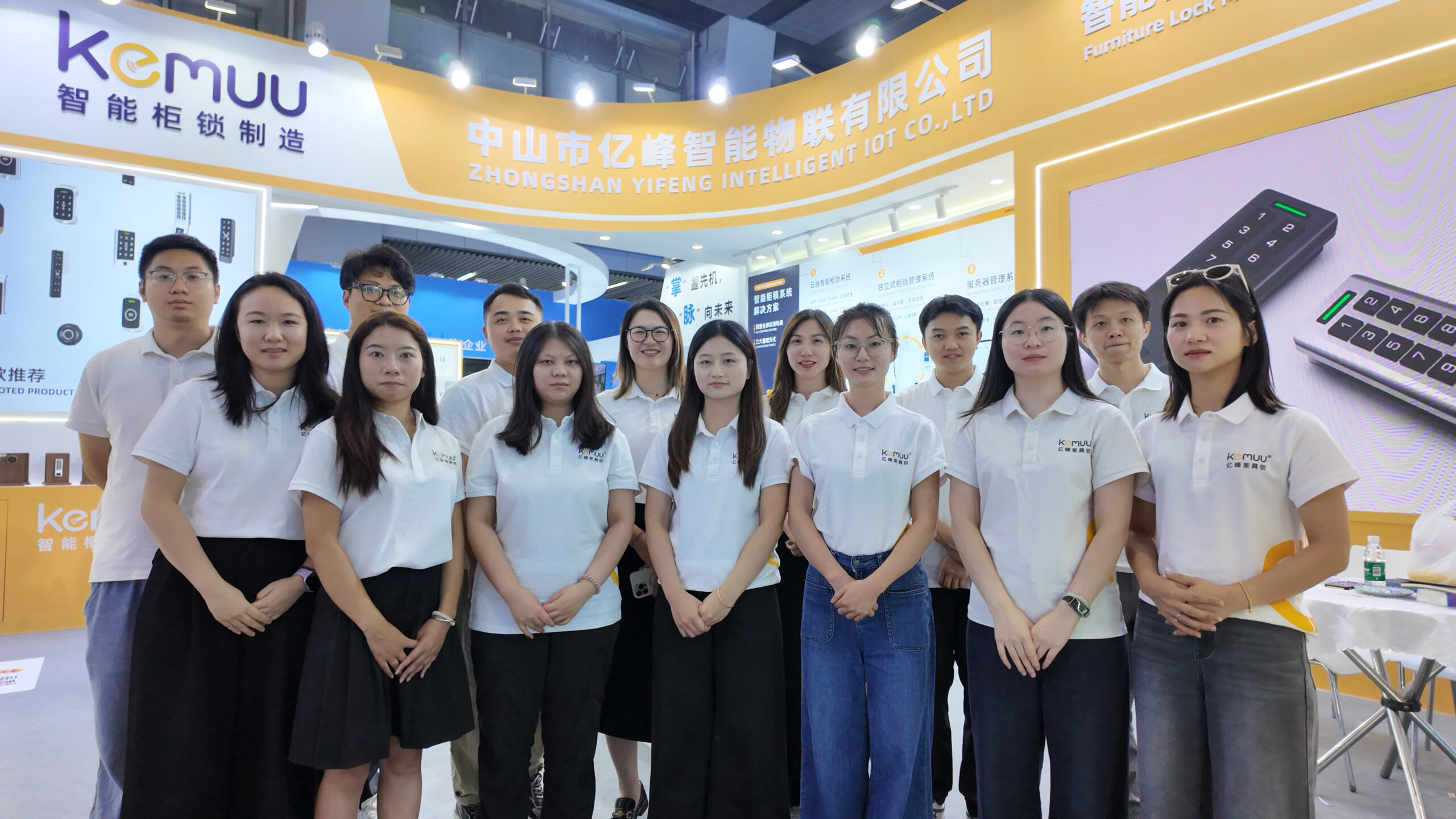
KEMUU at CBD Fair & CBS Guangzhou 2026: Redefining Smart Cabinet Locks as a Complete IoT Furniture Solution
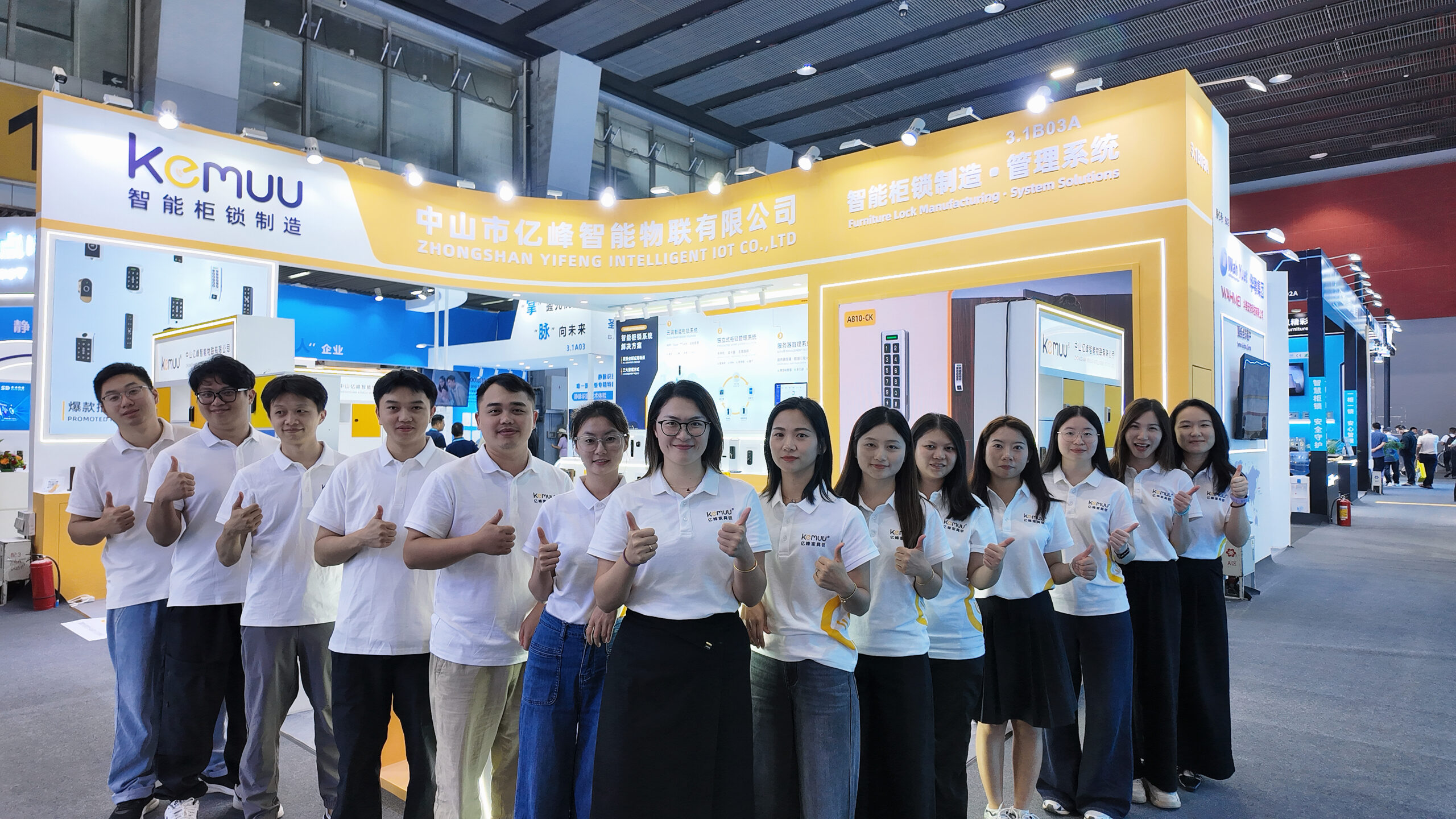
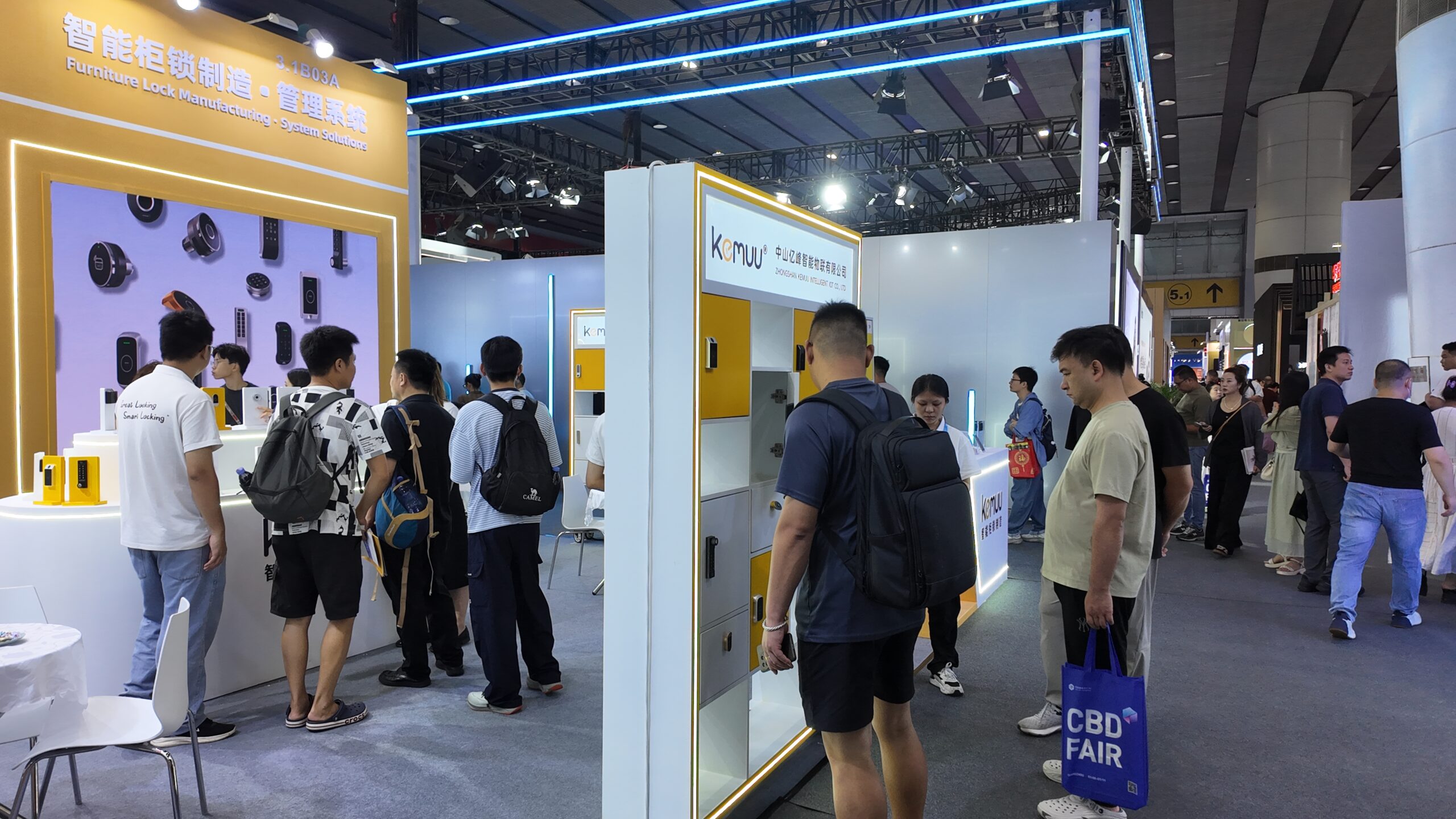
From July 8 to 11, 2026, the Canton Fair Complex once again became the beating heart of the global construction and interior design industry, as thousands of manufacturers, designers, and B2B buyers gathered for CBD Fair & CBS Guangzhou — the world’s leading exhibition for building decoration and furniture accessories. At Booth 3.1-B03A, KEMUU welcomed a record number of visitors, and the four days confirmed what we set out to prove before the show even opened: KEMUU is no longer just a smart cabinet lock manufacturer. We are a full-stack IoT furniture solution provider trusted by cabinet manufacturers, office furniture integrators, and commercial storage brands around the world.
A Show Floor Full of Real Conversations, Not Just Product Demos
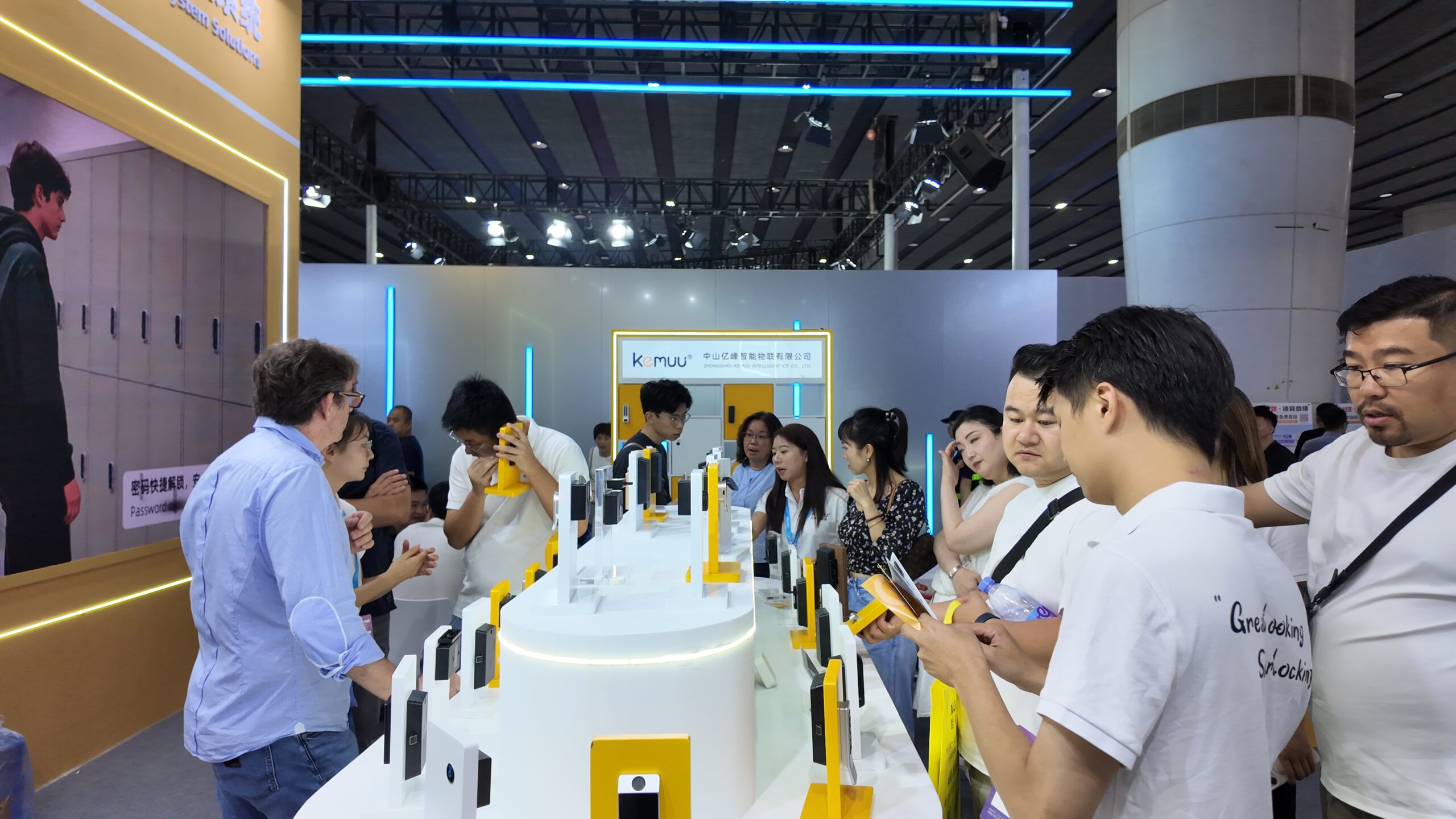
Trade shows are often judged by foot traffic, but at KEMUU we judge success differently: by the depth and relevance of the conversations we have. Over four packed days, our booth became a meeting point for procurement managers from major furniture groups, OEM/ODM buyers scouting new suppliers, hospitality and coworking space operators, and locksmith distributors looking to modernize their catalog with keyless technology.
What stood out most this year was the shift in the questions being asked. Just a few years ago, visitors wanted to know “does this lock work?” In 2026, the conversation has matured. Buyers now ask about system integration, API compatibility, fleet management dashboards, battery life across thousands of daily cycles, and how quickly a new SKU can move from sample approval to container shipment. This shift confirms a trend KEMUU has been anticipating and building for: smart cabinet locks are no longer a standalone accessory. They are a core component of connected furniture ecosystems, and buyers expect their supplier to understand the full system, not just the hardware.
Why Cabinet Manufacturers Keep Choosing KEMUU
Throughout the show, one theme repeated itself in nearly every meeting: buyers don’t just want a lock supplier — they want a manufacturing partner who can scale with them. This is where KEMUU’s identity as a strength-backed factory made the difference.
Behind every product on our booth stands a vertically integrated production facility with in-house mold development, injection molding, PCB assembly, and rigorous quality control at every stage. This matters enormously to serious B2B buyers, because it means KEMUU is not a trading company relabeling generic components. We control our own tooling, our own firmware, and our own supply chain — which translates directly into shorter lead times, tighter quality tolerances, and the flexibility to customize a lock’s dimensions, finish, or unlocking method to fit a client’s exact cabinet design.
Several visiting delegations toured our facility documentation and production capacity data on-site, and what resonated most was our ability to support both large-volume standard orders and smaller, highly customized OEM/ODM runs without compromising on delivery timelines. For office furniture integrators managing multi-country rollouts, and for cabinet manufacturers who need a reliable partner for private-label smart lock lines, this manufacturing depth is often the deciding factor — more than any single feature on a spec sheet.
From Component Supplier to Solution Partner
If there was one message KEMUU wanted every visitor to walk away with, it was this: we solve problems, not just sell parts.
A smart cabinet lock on its own is only useful if it fits seamlessly into a larger system — a hotel’s access management platform, a coworking space’s membership app, a corporate office’s asset security policy, or a logistics company’s locker network. This is precisely where many hardware manufacturers stop short, leaving buyers to assemble the rest of the puzzle themselves. KEMUU takes the opposite approach.
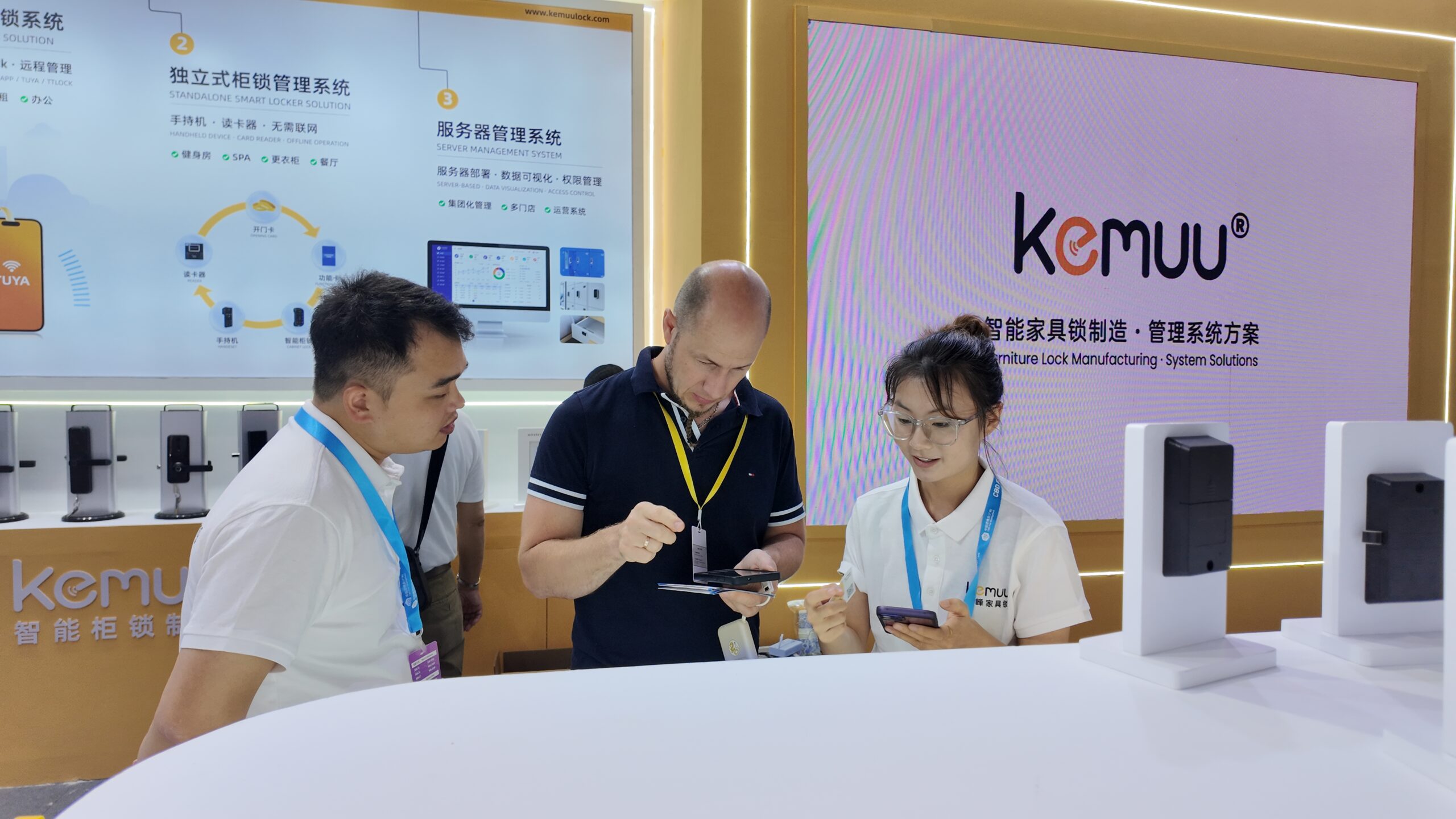
At Booth 3.1-B03A, our team walked buyers through complete IoT locker and cabinet solutions covering:
- Hardware customization — RFID, fingerprint, PIN code, mobile app (Bluetooth/NFC), and hybrid unlocking mechanisms, engineered to fit cabinets, drawers, lockers, and mailboxes of virtually any dimension.
- Cloud platform integration — centralized dashboards that allow facility managers to remotely monitor lock status, issue and revoke digital credentials, track usage logs, and receive real-time alerts across hundreds or thousands of units.
- Software and API support — SDKs and open APIs that let integrators connect KEMUU’s lock systems directly into their own apps, property management software, or enterprise access control platforms.
- After-sales and technical support — a dedicated engineering team that stays involved after the container ships, helping clients troubleshoot firmware updates, scale deployments, and adapt the system as their business grows.
This end-to-end approach is why an increasing share of our client base is made up not of one-time hardware buyers, but of long-term partners who return to KEMUU for every new product line, every new market entry, and every new generation of smart furniture they bring to market.
Smart Locker Management Solutions: One Platform, Five Ways to Manage
One of the most common questions we heard at Booth 3.1-B03A was not “what does your lock look like?” but “how will we actually manage hundreds — or thousands — of these locks once they’re installed?” This is exactly why KEMUU doesn’t sell a single lock system. We offer five distinct control methods, each engineered for a different scale of project and a different operational reality, so that buyers can choose the right fit instead of forcing their project into a one-size-fits-all product.
Before choosing a system, it helps to understand the two operating modes that run across our entire product line:
- Private Mode — each locker is assigned to a fixed user for long-term, personal use.
- Public Mode — any available locker can be temporarily assigned to a user and is automatically released after use, ideal for shared or high-turnover environments.
With that foundation in place, here is how our five control systems compare:
① Standalone System — Simple. Reliable. No Setup Required.
For homes, offices, and personal cabinets that need dependable security without any infrastructure at all, our standalone system supports both Private and Public Mode, requires no app, and needs no internet connection. It is the fastest system to deploy and the easiest to maintain, making it the natural starting point for smaller projects or budget-conscious buyers.
② Tuya Bluetooth APP — Smart Home Management
Built for residential lockers and home or office cabinets, this system connects to the popular Tuya smart home ecosystem via Bluetooth. Users get mobile app control, temporary passwords, full unlock records, and — with an optional gateway — remote authorization from anywhere. This system currently supports Private Mode only, making it best suited to fixed, individually-assigned lockers rather than shared-use environments.
③ TTLock Bluetooth APP — Professional Bluetooth Management
This is our most versatile app-based system, and the one we recommend most often to commercial buyers. It supports both Private and Public Mode, Bluetooth app control, password sharing, complete unlock records, and remote authorization via gateway — and critically, it is fully compatible with the TTLock Hotel System. For apartments, coworking spaces, gyms, hotels, and office buildings that need both professional app management and the flexibility of shared locker assignment, this system delivers the best balance of features and ease of deployment.
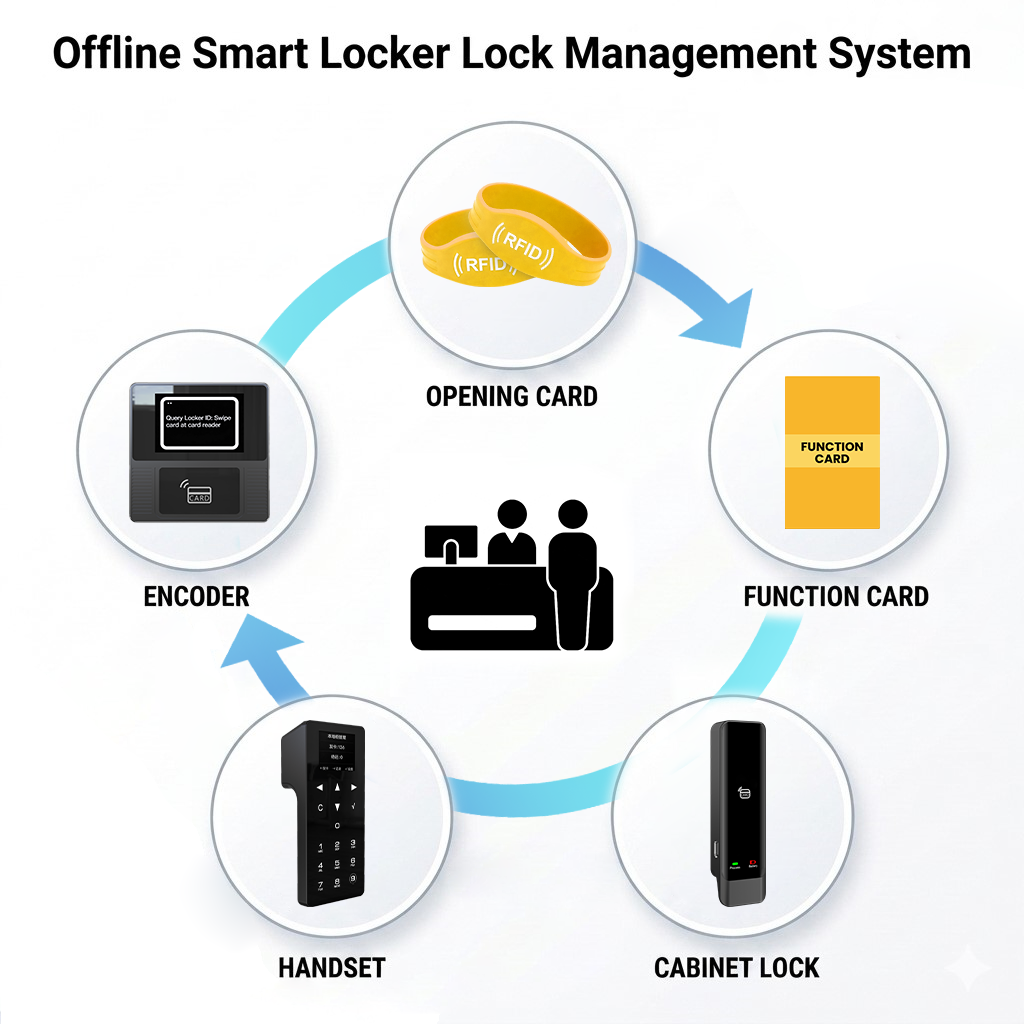
④ Handheld Management System — Efficient Offline Management for Large Projects
For projects with hundreds or thousands of lockers — schools, factories, hospitals, libraries, gyms, and other public facilities — KEMUU offers a dedicated handheld terminal with a built-in management program. Administrators can issue cards, configure lockers, manage users, and pull unlock records directly from the handheld device, with no PC, no software installation, and no internet connection required. It is purpose-built for fast, offline deployment at scale, and was one of the most requested demonstrations at our booth this year — buyers running large facilities consistently told us that eliminating the need for networked infrastructure was a major cost and complexity saver. Everything is managed directly from the handheld terminal.
⑤ Custom System Integration — Tailored for Professional Projects
For hotels, student dormitories, commercial buildings, and enterprise projects that already run on established property or hospitality management software, KEMUU builds custom integrations rather than asking clients to adapt to a fixed product. Our custom system is compatible with the Elock-V8 hotel management platform, supports API integration into proprietary or third-party management systems, and is available through full OEM/ODM development — allowing enterprise clients to launch a locker system under their own brand, built on KEMUU’s proven hardware and firmware foundation.
Taken together, these five systems are the clearest illustration of what it means for KEMUU to be a solution provider rather than a component supplier. A single hardware platform, backed by our in-house factory, can scale from a single home office cabinet to a nationwide network of thousands of lockers — with the management method chosen to match the project, not the other way around. This flexibility was a recurring point of interest for the integrators and facility managers we met at CBD Fair & CBS Guangzhou 2026, many of whom arrived expecting to discuss a single lock model and left with a full system architecture for their next rollout.
A Client Base That Speaks for Itself
Trust is earned meeting by meeting, container by container, and KEMUU’s growing global client network reflects years of consistent delivery. During CBD Fair & CBS Guangzhou 2026, our booth welcomed returning partners from Europe, North America, Southeast Asia, the Middle East, and Australia — furniture manufacturers who first discovered KEMUU at previous editions of the fair and have since scaled their orders year after year as their own smart furniture lines have grown.
This diversity of clients — spanning office furniture producers, hospitality suppliers, school and gym locker manufacturers, coworking space operators, and general cabinet OEMs — is not incidental. It reflects a deliberate strategy at KEMUU: build a product platform flexible enough to serve many verticals, while maintaining the manufacturing discipline to guarantee consistent quality no matter the order size. A buyer sourcing 500 units for a boutique hotel renovation and a buyer sourcing 50,000 units for a national office furniture rollout both receive the same engineering rigor and the same responsive support.
Many of the buyers we met this year told us the same thing in different words: they don’t want to manage five different suppliers for locks, firmware, app integration, and after-sales support. They want one partner who understands the whole picture. That is the role KEMUU has built itself to fill.
Key Trends We Observed on the Show Floor
Beyond our own booth, walking the halls of CBD Fair & CBS Guangzhou 2026 offered a clear read on where the smart furniture and building decoration industry is heading:
1. Keyless is becoming the default, not the upgrade. Fewer buyers are asking “should we add smart locks?” and more are asking “which smart lock system fits our roadmap?” Mechanical locks are increasingly viewed as the legacy option rather than the standard.
2. Interoperability is now a top purchasing criterion. Buyers want lock systems that can talk to existing building management software, access control systems, and mobile apps — rather than closed, standalone systems that create data silos.
3. Sustainability and energy efficiency matter more each year. Long battery life, low-power standby modes, and durable materials were recurring discussion points, reflecting both cost pressure and environmental commitments from larger furniture brands.
4. Customization at scale is the new competitive edge. Buyers no longer accept a trade-off between fast delivery and tailored design. They expect factories to offer both — which is precisely why manufacturing depth, like the kind KEMUU maintains in-house, has become such a strong differentiator.
5. After-sales support is now part of the product. Several buyers explicitly told us that ongoing technical support and firmware updates weigh as heavily in their decision as the initial hardware specs.
These trends validate the direction KEMUU has invested in for years, and they shape the roadmap for the products and services we’ll bring to future editions of the fair.
Looking Ahead: What This Means for Our Partners
CBD Fair & CBS Guangzhou 2026 has closed its doors, but for KEMUU, the real work is just beginning. Every conversation held at Booth 3.1-B03A is now being followed up with samples, technical specification documents, and factory audits for the buyers ready to move forward. For cabinet manufacturers evaluating a new smart lock supplier, for office furniture integrators planning next year’s product catalog, and for commercial storage brands looking to modernize their offering, our message remains consistent: KEMUU brings together a strength-backed factory, a proven global client network, and true end-to-end solution capability — not just components.
Whether you visited our booth in person or are discovering KEMUU for the first time through this recap, we invite you to start the conversation. Send us your cabinet dimensions, your target unlocking method, your expected order volume, or simply the problem you’re trying to solve, and our engineering team will respond with a solution built around your project — not a generic catalog page.
The keyless future of commercial storage that we spoke about before the show has now moved from concept to concrete partnerships. We look forward to building the next generation of smart, connected furniture together with the manufacturers and integrators we met this July — and with the many more we hope to meet at the next edition of CBD Fair & CBS Guangzhou.